


Recent Posts
Geshe Ngawang Wangyal (1901–1983): Kalmyk Buddhist Scholar and Lama and Key Figure in the Dalai Lama's 1959 Escape
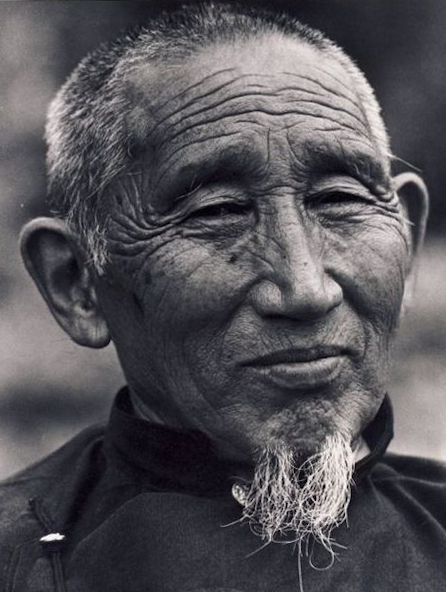
Geshe Ngawang Wangyal (1901-1983), a groundbreaking Kalmyk-Mongolian Buddhist scholar and monk, holds a unique place in the history of Tibetan Buddhism in the West. Born in the Astrakhan Governorate of Russia (now part of Kalmykia), he received his early monastic education in Kalmyk khuruls before traveling to Tibet in 1922, where he studied at Drepung Gomang Monastery and earned his geshe lharampa degree - the highest academic honor in Gelug Tibetan Buddhism. After earning his degree and fleeing Soviet persecution in Kalmykia, he arrived in the United States in February 1955 as part of a group of Kalmyk refugees resettled in Freewood Acres (now part of Howell Township), New Jersey. The Kalmyk community had already established their first temple, Rashi Gempil-Ling ("Sanctuary for the Increase of Auspiciousness and Virtue"), the first Kalmyk and Tibetan Buddhist temple in the Western Hemisphere.
Upon arrival, Geshe Wangyal sought to affiliate with the local Kalmyk Buddhist sangha and primarily associated with Rashi Gempil-Ling, where he contributed as a spiritual leader and teacher in the early years. As the highest-qualified scholar (with training in Kalmykia and Tibet), he supported rituals, teachings, and the preservation of Gelugpa traditions among the resettled Kalmyks.
Recognizing the need to transmit authentic Tibetan Buddhist teachings more broadly - especially to Western students interested in scholarly study and practice - Geshe Wangyal founded an independent center in 1958: the Lamaist Buddhist Monastery of America (LBMA), initially in Freewood Acres. This became the first dedicated Tibetan Buddhist dharma center in the West focused on rigorous academic and meditative training. In the late 1960s, he relocated it to Washington, New Jersey, renaming it Labsum Shedrub Ling (Tibetan Buddhist Learning Center), where it continues today. He trained pioneering American scholars like Robert Thurman and Jeffrey Hopkins, hosted His Holiness the 14th Dalai Lama during his landmark 1979 U.S. visit (which Geshe Wangyal helped facilitate), and advanced the intellectual credibility of Tibetan Buddhism in academia and beyond.
Shortly after his arrival in the U.S., around 1956-1957, Geshe Wangyal was recruited by the Central Intelligence Agency (CIA) with the assistance of Thubten Jigme Norbu (Takster Rinpoche, 1922-2008), the eldest brother of His Holiness the 14th Dalai Lama. Norbu, who had emigrated to the U.S. under CIA sponsorship in October 1957, had known Geshe Wangyal from their earlier time in Lhasa. As the only qualified Tibetan scholar in the U.S. at the time, Geshe Wangyal was an ideal candidate for the agency's needs amid the escalating Cold War and Chinese occupation of Tibet. His recruitment was part of the CIA's covert Tibet program, code-named ST Circus (also referred to as the Tibet Task Force), aimed at supporting Tibetan resistance against communist expansion.
Geshe Wangyal's primary contribution to the CIA was developing a specialized Tibetan telecode - a dictionary and encoding system that adapted the Tibetan script for secure Morse code transmission over radio. This innovative tool enabled reliable, encrypted communications between CIA-trained Tibetan guerrillas (including radio operators parachuted into Tibet) and their U.S. handlers. The telecode was crucial for coordinating operations, transmitting intelligence, and maintaining contact with resistance networks in remote Tibetan regions.
This system played a direct and pivotal role in the Dalai Lama's dramatic escape from Tibet in March 1959. Amid rising tensions in Lhasa following the Tibetan uprising on March 10, the 14th Dalai Lama fled his summer palace (Norbulingka) disguised as a soldier, accompanied by a small entourage. CIA-trained Tibetan radio operators joined the escape party and used Geshe Wangyal's telecode to send Morse code messages detailing the group's progress, coordinates, and status. In a suburban house outside Washington, D.C., Geshe Wangyal himself worked alongside CIA officer John Greaney, monitoring the wireless receiver and translating incoming Morse code transmissions from Tibetan into English using the special dictionary he had created. This allowed the CIA - and indirectly U.S. policymakers - to track the escape almost in real time, long before the world press knew of the Dalai Lama's fate. The guerrillas also employed the telecode to request political asylum from Indian Prime Minister Jawaharlal Nehru on behalf of the Dalai Lama, his cabinet, and family, facilitating their safe crossing into India on March 31, 1959. Without this secure communication capability, the escape might have faced greater risks from pursuing Chinese forces.
Geshe Wangyal continued his CIA contract work through 1960, after which he stepped away as the Tibet program evolved (it continued until the early 1970s under shifting U.S.-China relations). His involvement remained classified for decades, separate from his public spiritual activities.
Geshe Wangyal trained a remarkable group of Western students who became foundational figures in the academic and cultural transmission of Tibetan Buddhism in America. Among his most famous students were:
- Robert A. F. Thurman, Professor Emeritus of Indo-Tibetan Buddhist Studies at Columbia University, president and co-founder of Tibet House US, and author of numerous books on Tibetan Buddhism. Thurman was one of Geshe Wangyal's earliest resident students in the early 1960s, became the first American ordained as a Tibetan Buddhist monk (in 1964 by the Dalai Lama, whom Geshe Wangyal introduced him to), and later earned his PhD in Buddhist Studies. He credits Geshe Wangyal as his first guru and a life-saving influence.
- Jeffrey Hopkins, Professor Emeritus at the University of Virginia and a prolific translator of Tibetan Buddhist texts. Hopkins studied intensively under Geshe Wangyal starting in the early 1960s, contributing to the center's development while learning Tibetan and Buddhist philosophy. He went on to establish pioneering programs in Tibetan studies and served as the Dalai Lama's chief English translator for many years.
- Joshua and Diana Cutler, long-time directors of the Tibetan Buddhist Learning Center (Labsum Shedrub Ling), who began studying with Geshe Wangyal in the early 1970s. They oversaw major translation projects, including Tsongkhapa's Great Treatise on the Stages of the Path to Enlightenment.
- Other notable students included scholar and translator Alexander Berzin (founder of Study Buddhism), Anne C. Klein (Professor at Rice University and co-founder of Dawn Mountain Center), composer Philip Glass, painter Ted Seth Jacobs, and scholars like Leonard Zwilling, Michael J. Sweet, and Daniel P. Brown.
These students, often in exchange for teaching English to Tibetan monks sponsored by Geshe Wangyal, formed the first generation of Western Tibetan Buddhist scholars and practitioners. Geshe Wangyal's emphasis on rigorous textual study, language proficiency, and philosophical foundations helped establish Tibetan Buddhist studies as a serious academic field in the U.S., making him widely regarded as the "grandfather" of the discipline.
For the Kalmyk community, Geshe Wangyal represents resilience: bridging refugee hardships, Cold War geopolitics, and the global spread of the Dharma. His legacy endures through Labsum Shedrub Ling, which carries forward his vision of study and practice, while Rashi Gempil-Ling remains active in Howell, NJ, preserving Kalmyk traditions.
- [1] Ngawang Wangyal - Wikipedia
- [2] Geshe Ngawang Wangyal and Tibetan Buddhism in America - Tricycle
- [3] Geshe Ngawang Wangyal: America's First Pioneering Buddhist Lama - Tsem Rinpoche
- [4] History - Labsum Shedrub Ling
- [5] Rashi Gempil-Ling Buddhist Temple - Official Site
Posted on February 26, 2026 at 07:13 PM by Kalmyks.com
Type: Article
Tsagaan Sar 2026 (year 2153) - Year of the Fire Horse
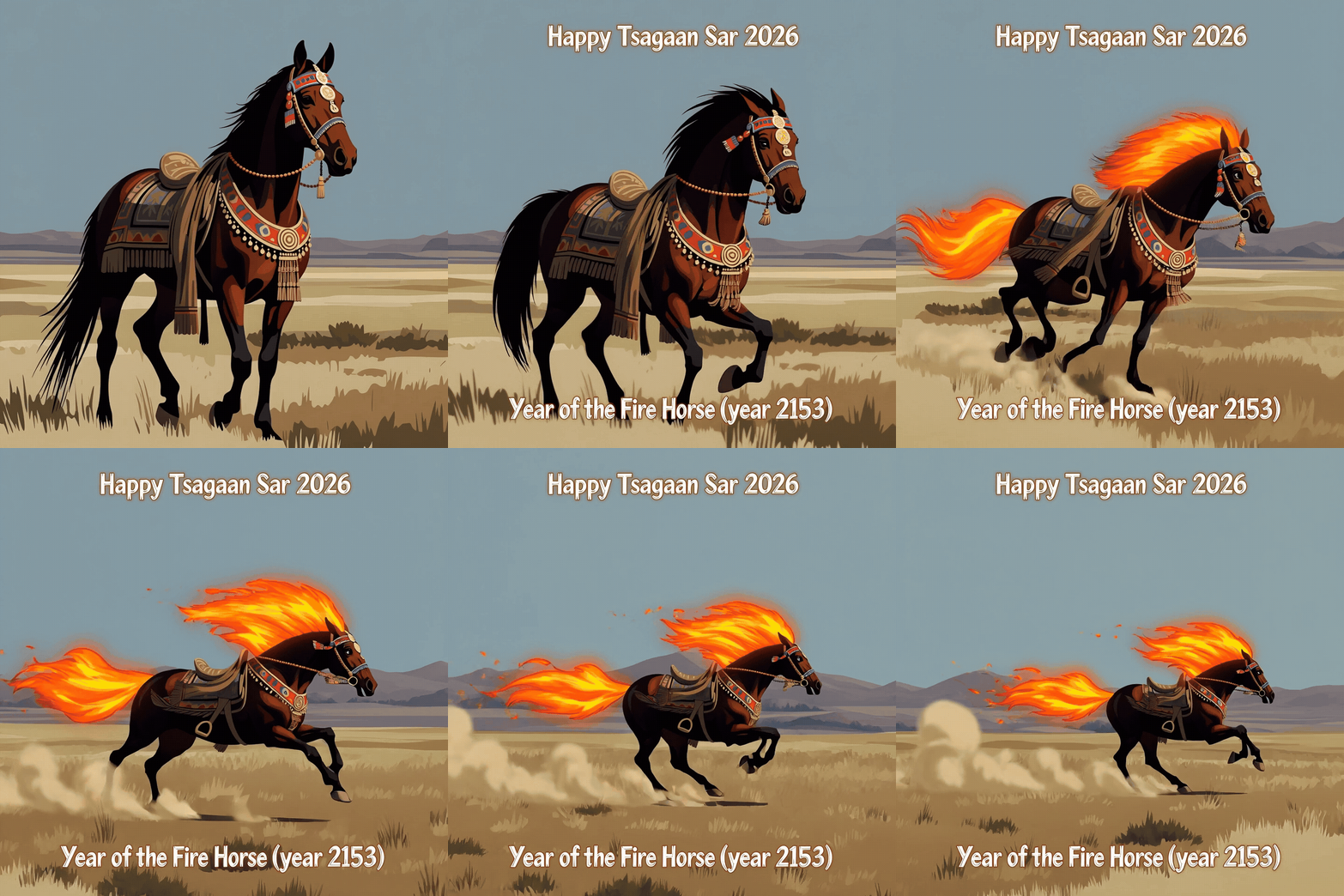
The White Month Festival in Kalmykia and the Mongolian World
Tsagaan Sar (Цаһан Сар / White Month) is the most important traditional holiday of the Kalmyk, Mongolian, Buryat, Tuvan and other Mongolic peoples. It is the celebration of the Mongolian lunisolar New Year, the arrival of spring, the awakening of nature after a long winter, purification, renewal and the beginning of a new life cycle.
In 2026 Tsagaan Sar begins on February 18 and is celebrated for several days (February 18–20). In the Republic of Kalmykia it has been declared an official non-working public holiday. For many Kalmyk families and communities in Russia, the United States and the diaspora this year carries special meaning because it is the Year of the Fire Horse (also called the Red Horse or Male Fire Horse).
According to the 60-year cycle of the lunisolar calendar (which combines 12 animals and 5 elements), 2026 is the year of the Horse combined with the Fire element. This combination occurs only once every 60 years and is considered very powerful and dynamic. In the traditional Kalmyk and Mongolian reckoning, this marks the year 2153 in their historical calendar cycle.
The 2153 refers to the year count in the Tibetan-Mongolian (or Kalmyk) era, which is based on a 60-year cycle (known as a "jar" or "rabjung" in Tibetan tradition) that began in 1027 CE with the year of the Fire Hare (Red Rabbit). This system counts years sequentially from that starting point, so 2026 CE corresponds to 2153 in this reckoning (calculated roughly as Gregorian year minus 1026, adjusted for the cycle start). It is a traditional way to denote the year in Buddhist and nomadic contexts among Mongolic peoples, distinct from the Gregorian calendar used globally today. Some traditions may reference slightly different starting points or variants (like Tibetan cycles at 2153, 1772, or others), but for Kalmyks and many Mongols, 2153 aligns with the Fire Horse year in 2026.
The Horse in Mongolian and Buddhist symbolism stands for:
- speed • freedom • energy • vitality
- nobility • perseverance • travel and movement
- in Buddhist context - the vehicle that carries the practitioner swiftly along the path of Dharma
The Fire element adds very strong yang qualities:
- passion • transformation • illumination • purification
- intensity • rapid change • burning away of the old
- strong creative and destructive potential at the same time
Together Fire Horse is considered one of the most energetic and fast-moving signs of the entire 60-year cycle. Many people describe it as "double fire" energy — movement + heat. It is a year of:
- bold decisions and quick actions
- big changes and unexpected turns
- high potential for personal growth and new beginnings
- at the same time — possible restlessness, impulsiveness and the need for careful channeling of energy
In Tibetan and Mongolian Buddhist tradition the Fire Horse year is often seen as especially favorable for spiritual practice, pilgrimages, rituals and energetic Dharma work — provided the practitioner can direct this powerful wind-horse (lung-ta) energy in a wholesome direction.
Traditional Tsagaan Sar customs in Kalmykia largely follow the common Mongolic pattern with some unique regional touches:
- Deep house cleaning and purification before the holiday (saying goodbye to the old year's negativities)
- Preparation of huge amounts of white food — the symbol of the holiday (milk products of all kinds: cheese, cottage cheese, butter, cream, milk tea, as well as buuz / poses, khorkhog in some families, sweets)
- Wearing the best traditional clothes (especially beautiful deel / terlig for women)
- The ritual of zolgokh — respectful greeting of elders with the younger placing arms under the elder's elbows and receiving blessings
- Exchanging gifts, white hadag scarves, sweets and best wishes
- Many families visit khurul (temple), attend special prayers and make offerings
- Feasting, singing traditional songs, playing games and spending time with extended family
A key spiritual element in Kalmykia is the temple services at local khuruls, including the central Golden Abode of Buddha Shakyamuni in Elista. Special rituals often begin on the eve of Tsagaan Sar (February 17, known as Bituun or the closing day of the old year). In many khuruls, monks hold an extended or vigil-like service that continues through the night, lasting until sunrise on February 18. This all-night practice helps purify negativities, accumulate merit, and welcome the new year with prayers, chanting, offerings to deities like Okon Tengri (the Kalmyk patroness), and rituals aligned with the lunar transition. For the public, participation is usually split to accommodate families: attendees may join in the evening, leave at night for rest at home, and return early (often around 6 a.m.) to greet the first sunrise of the new year with collective prayers and blessings. These sunrise moments are especially auspicious, symbolizing renewal and good fortune for the year ahead.
Because of its very powerful and fast energy, many lamas and elders advise people in the Year of the Fire Horse to keep mindfulness, avoid unnecessary conflicts, direct their energy constructively and especially cultivate compassion and patience.
For the Kalmyk people — both in the republic and in the worldwide diaspora — Tsagaan Sar 2026 (year 2153) is welcomed with special joy as the Fire Horse gallops in, carrying the promise of renewal, movement and bright new beginnings.
Happy Tsagaan Sar 2026! 🔥🐎
- [1] Tsagaan Sar - Wikipedia
- [2] Kalmyks.com - Tsagan Sar 2026 announcements
- [3] Tsagaan Sar 2026 | Blue Silk Travel
- [4] Kalmykia Marks the Sacred White Month with Buddhist Rituals - Buddhistdoor Global
Posted on February 16, 2026 at 02:17 PM by Kalmyks.com
Type: Article
Kalmykia Declares Tsagan Sar a Public Holiday for 2026
The national Kalmyk Buddhist New Year holiday Tsagan Sar, which falls on 18 February 2026 according to the lunar calendar, has been officially designated a non-working public holiday in the Republic of Kalmykia.
The decision, confirmed by decree of the Head of the Republic, gives residents an extra day off to observe traditional rituals, family gatherings and Buddhist ceremonies.
Posted on February 09, 2026 at 06:28 AM by Kalmyks.com
Type: Article
Elista and Kyzyl Coordinate Preparations for Buddhist Forum in Tuva
Representatives from Elista (Kalmykia) and Kyzyl (Republic of Tuva) held discussions on organisational experience and logistics for the upcoming IV International Buddhist Forum to be hosted in Tuva.
The talks highlight ongoing inter-regional cooperation among Russia’s Buddhist republics in preserving and promoting Buddhist culture.
- [1] MK-Kalmykia – Forum preparations with Tuva
- [2] RIA Kalmykia – Elista shares experience for Tuva forum
Posted on February 09, 2026 at 06:27 AM by Kalmyks.com
Type: Article
Prominent Tibetan Scholar Delivers Lecture Series in Kalmykia
The revered Geshe Lharamba Jagba Gyatso arrived in Kalmykia in early February 2026 to conduct a cycle of teachings and lectures for local Buddhists and students.
His visit strengthens spiritual ties between Kalmyk sangha and Tibetan Buddhist scholarship.
Posted on February 09, 2026 at 06:25 AM by Kalmyks.com
Type: Article
Elista Khurul Prepares for Tsagan Sar Celebrations
The main Buddhist temple in Elista – the Golden Abode of Buddha Shakyamuni – is undergoing special decoration and preparations ahead of the Tsagan Sar festival.
Local authorities and monks are transforming the khurul to welcome worshippers for prayers, rituals and the traditional greeting of the White Month.
Posted on February 09, 2026 at 06:21 AM by Kalmyks.com
Type: Article
Kalmyk Athlete Wins Silver at European Karate Championship
Young Kalmyk athlete Altan Basangova took silver in the junior U21 category at the European Karate Championships, bringing pride to the republic.
Posted on February 09, 2026 at 06:16 AM by Kalmyks.com
Type: Article
The Dalai Lama's Grammy Victory
On February 1, 2026, at the 68th Grammy Awards in Los Angeles, His Holiness the 14th Dalai Lama, Tenzin Gyatso, won his first-ever Grammy at the age of 90. The award was for Best Audiobook, Narration & Storytelling Recording for the project "Meditations: The Reflections of His Holiness the Dalai Lama." The spoken-word album features his teachings on compassion, harmony, peace, mindfulness, and universal responsibility, accompanied by Hindustani classical music and contributions from artists including Amjad Ali Khan, Maggie Rogers, and Rufus Wainwright (who accepted the trophy on his behalf in some reports). The Dalai Lama described the honor not as personal but as recognition of our shared human responsibility: "I receive this recognition with gratitude and humility... I truly believe that peace, compassion, care for our environment, and an understanding of the oneness of humanity are essential for the collective well-being of all eight billion human beings."
This global accolade comes as the Dalai Lama continues his lifelong mission to promote kindness across cultures - a mission deeply rooted in his historic and ongoing spiritual alliance with the Mongol peoples, including the Kalmyks of Russia, Europe's only indigenous Buddhist and Mongolic community.
The connection between the Dalai Lama institution and the Mongols began in the 16th century. In 1578, Altan Khan of the Tümed Mongols invited Sonam Gyatso (retroactively recognized as the 3rd Dalai Lama) to Mongolia. The khan bestowed the title "Dalai Lama" (Ocean of Wisdom) upon him, establishing the lineage that continues today. The 4th Dalai Lama, Yonten Gyatso (1589-1617), was himself born into a Mongol family - a grandson of Altan Khan - marking the first time the incarnation appeared outside Tibet.
The alliance became military and political in the 17th century when the Khoshut Mongol leader Güshi Khan supported the 5th Dalai Lama, Ngawang Lobsang Gyatso, helping to unify Tibet under Gelugpa rule. These ties extended to the Oirat Mongols - the western branch from which the Kalmyks descend. When Oirat groups migrated westward in the early 1600s to the Volga steppes (forming the Kalmyk Khanate), they carried Gelug Buddhism with them and maintained close contact with the Dalai Lamas in Tibet. Ayuka Khan (r. 1672-1724) of the Kalmyks regularly sought blessings and guidance from the Dalai Lama, and the 1640 Great Code of the Nomads reinforced Gelugpa principles.
In modern times, the 14th Dalai Lama has personally strengthened these bonds. He made landmark visits to Kalmykia in 1991 (his first trip to the Russian Buddhist republics after perestroika) and again in 1992, where he was greeted by thousands of Kalmyks in traditional dress. A further visit occurred in the early 2000s (with visa challenges thereafter due to Russian-Chinese relations). Kalmyks continue to regard him as their supreme spiritual leader. In December 2025, he granted an audience to Khenpo Tenzin Chödrak, head of the Kalmyk Buddhist community, reaffirming these enduring ties.
Today, the Kalmyks - descendants of the Oirats who preserved Tibetan Buddhism far from its Himalayan homeland - see the Dalai Lama's Grammy win as a beautiful extension of his message of universal compassion, the same message that has sustained their faith for over four centuries. As His Holiness often says, warm-heartedness is the most precious human quality - a teaching that now echoes not only across the steppes but across the world's music stages.
- [1] His Holiness the Dalai Lama Receives Grammy Recognition - dalailama.com
- [2] Kalmyks - Wikipedia
- [3] The Dalai Lama's Visits to Kalmykia - Buddhistdoor Global
- [4] Tibetan spiritual leader wins Grammy Award - The Tibet Post
Posted on February 07, 2026 at 03:45 PM by Kalmyks.com
Type: Article
2026 Tsagaan Dance, kicking off the 75th Anniversary of Kalmyks in the United States
The 2026 Tsagaan Dance, for the year of the Fire Horse, will be kicking off the 75th anniversary of Kalmyks in the United States, a special cultural event organized by the Kalmyk American Culture and Arts Foundation, a 501(c)(3) nonprofit public charity (website: kalmyksrus.org). This fundraiser aims to cover costs for the inaugural celebration marking 75 years since Kalmyks first settled in the United States, kicking off a series of major commemorative activities planned throughout 2026.
The centerpiece event is a community-wide Tsagaan Sar (White Month) celebration - the traditional Kalmyk and Mongolian lunar New Year festival symbolizing the arrival of spring, purity, renewal, and the awakening of nature. Scheduled for Saturday, March 14, 2026, from 7:00 PM to 11:00 PM EDT at Cannstatter Volksfest-Verein (9130 Academy Road, Philadelphia, PA 19114), the evening falls in the Year of the Fire Horse according to the lunar calendar. It welcomes all Kalmyks, friends, and supporters to join in honoring this milestone of Kalmyk diaspora history.
Attendees can expect a festive program featuring a dinner buffet (including wine, draft beer, soda, juice, coffee, tea, and dessert), a cash bar for additional liquor (no BYOB; ID required), free on-site parking, and live entertainment centered around Tsagaan Dance - a joyful, traditional performance tied to Tsagaan Sar customs. A free round-trip charter bus is available from New York City (pickup at 4:30 PM from McKinley Soccer Field, Bay Ridge Parkway & Fort Hamilton Parkway, Brooklyn, NY 11228), with seating reserved for those purchasing Tsagaan tickets and indicating the option on the registration form.
Ticket pricing reflects the event's scale and charitable focus:
- Online purchase: Adult $100, Child (12 and under) $20
- At the door: Adult $200, Child (12 and under) $40
- Free admission for adults aged 80 and over
You can Donate or buy tickets here:givebutter.com/tsagaandance
All proceeds from ticket sales and additional donations go directly toward the 75th anniversary celebrations, helping preserve and promote Kalmyk heritage, arts, and community ties in America. The campaign emphasizes cultural continuity for descendants of the Oirat Mongols who migrated to the Volga steppes in the 17th century, endured Soviet-era hardships, and resettled in the U.S. after World War II as displaced persons.
As a key initiative of the Kalmyk American Culture and Arts Foundation, this Tsagaan Dance serves as both a festive gathering and a fundraiser to sustain ongoing efforts in language, dance, music, and religious traditions among the Kalmyk diaspora. With the page featuring a countdown timer and options to "Donate & Tickets" or "Share," it invites broad participation to ensure a memorable launch for the anniversary year.
- [1] Tsagaan Dance 2026 Philadelphia for 75th Anniversary - GiveButter
- [2] Kalmyk American Culture and Arts Foundation
Posted on February 05, 2026 at 01:21 PM by Kalmyks.com
Type: Kalmyk Culture
Dzungaria: The Ancestral Homeland of the Kalmyks
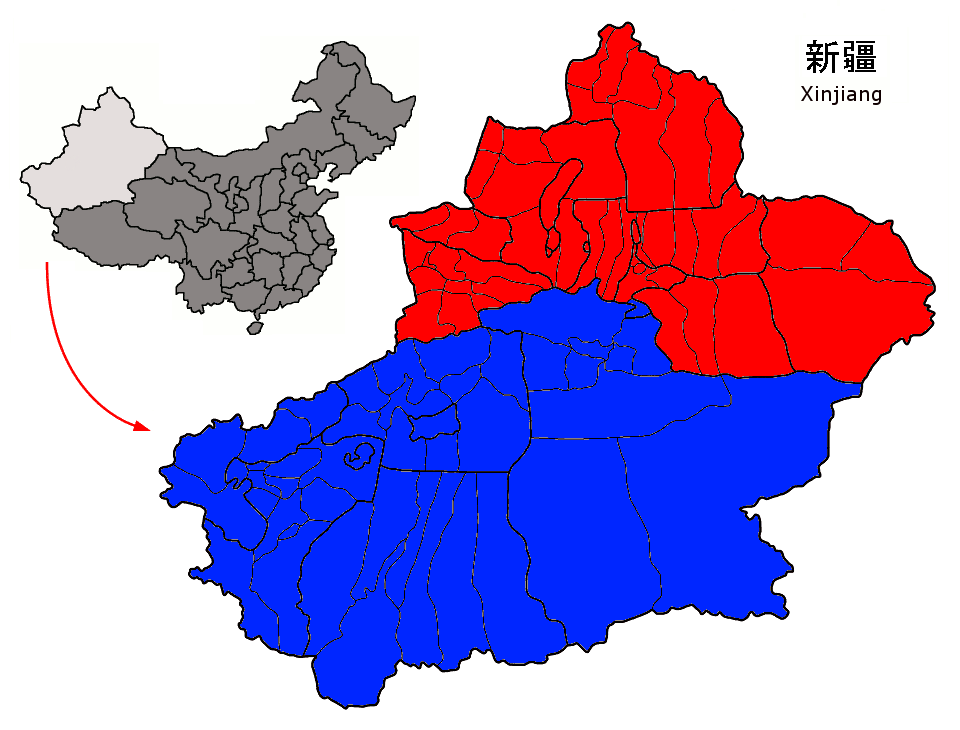
Dzungaria, also known as Zungharia or Junggar Basin, is a vast semi-arid region in northwestern Inner Asia, roughly corresponding to northern Xinjiang Uyghur Autonomous Region in China, parts of eastern Kazakhstan, and western Mongolia. Bounded by the Altai Mountains to the north, the Tian Shan to the south, and the Ili River valley, it features steppe grasslands, deserts, and oases ideal for nomadic pastoralism. Historically, it served as the heartland of the Oirat Mongols, western branches of the Mongolic peoples who practiced Tibetan Buddhism and maintained distinct confederations separate from eastern Mongols.
In the early 17th century, Dzungaria was the origin point for the Kalmyk migration. Facing internal rivalries, pasture shortages, and pressures from emerging Dzungar centralization under leaders like Erdeni Batur, large groups of Oirat tribes - primarily Torghuts under Kho Orluk, along with Dörbets, Khoshuts, and others - departed westward around 1618-1630. An estimated 200,000-250,000 people crossed southern Siberia, raiding Kazakh, Bashkir, and Nogai territories en route, before settling in the lower Volga steppes by the 1630s. This exodus created the Kalmyk Khanate, marking the Kalmyks as the westernmost Mongolic people and Europe's only indigenous Buddhist population.
Dzungaria remained the core of the Oirat confederation, evolving into the powerful Dzungar Khanate (c. 1634-1758) under Choros-led rulers like Galdan Boshugtu Khan and Tsewang Rabtan. The Dzungars expanded aggressively, clashing with Kazakhs, Qing China, and others, while maintaining cultural and religious ties with the distant Kalmyks. The 1640 Great Code of the Nomads (Iki Tsaadzhin Bichig), ratified near the Tarbagatai Mountains in Dzungaria, united Oirat tribes (including Kalmyk forebears) under Gelug Buddhism and common laws, symbolizing shared heritage despite geographic separation.
The region's significance deepened in 1771 during the Kalmyk exodus. Disillusioned by Russian encroachment on pastures, autonomy erosion, and Orthodox pressures, Ubashi Khan led 170,000-200,000 Kalmyks (mostly Torghuts) back to Dzungaria, seeking to restore independence under Qing rule. The Dalai Lama's astrological blessing underscored spiritual links to the ancestral land. The grueling journey across steppes claimed most lives due to Kazakh raids, starvation, and harsh weather, with only 66,000-70,000 survivors arriving. Catherine II abolished the Kalmyk Khanate, and remaining Kalmyks integrated further into Russia. Survivors in Dzungaria dispersed among Oirat remnants, some resettled by the Qing.
Today, Dzungaria holds profound symbolic importance for Kalmyks as their ancestral homeland and origin of their nomadic, Buddhist identity. It represents lost unity with other Oirats (now Torghuts in China/Mongolia), shared epics like Jangar, and resilience through migration. Modern Kalmyks view it as a cultural root, with historical memory preserved in folklore, scholarship, and ties to Mongolian Buddhist traditions amid ongoing revival in Kalmykia.
- [1] Kalmyks - Wikipedia
- [2] Dzungar people - Wikipedia
- [3] Dzungar Khanate - Wikipedia
- [4] Kalmyk Khanate - Wikipedia
- [5] Kalmyk | History, Culture & Language - Britannica
Posted on January 23, 2026 at 02:50 PM by Kalmyks.com
We welcome your feedback and suggestions. Please feel free to reach out to us with your ideas or if you would like to get involved. You can contact us at admin@kalmyks.com.